The post Luke Ch16 first appeared on Calvary Chapel Portsmouth.
]]>In this chapter, Jesus warns the disciples about the deceitfulness of riches. As Bible commentator Adam Clarke put’s it, “Riches promise MUCH, and perform NOTHING: they excite hope and confidence, and deceive both: in making a man depend on them for happiness, they rob him of the salvation of God and of eternal glory. For these reasons, they are represented as unjust and deceitful”.
The chapter begins with the parable of the unjust steward – a man who had acted deceitfully toward his boss, and as a result loses his job. But before he is dismissed, he calls all those who owe his boss. Using the authority of his position (while it lasts) he writes off much of the outstanding debt of these people – reducing the amount they individually owe to his boss, in the hope that his act of kindness toward them will be reciprocated to him when he is shortly to be looking for work!
Jesus uses this example to make the point that “the children of this world are in their generation wiser than the children of light”. v8
“[Jesus] was not commending his unrighteous action or his sin, but only his wisdom in that, knowing the limited amount of time he had left he used his position to prepare for his future” – Arnold Fruchtenbaum
How much thought and care do those in the world give to their (earthly) future, their inheritance, and to maximizing their opportunities? In contrast, how much do the Children of God give time to their inheritance and maximizing their opportunities now? Is it not a sad reflection on the Church, in general, that it does not have the same zeal for Godly things, laying up treasure in Heaven, that the world has for material things and the acquisition of the world’s riches?
The lesson Jesus is teaching is twofold: Firstly, trusting in riches is a great deception. Secondly, his disciples should be as focussed on using our time, money and gifts for His glory and the coming kingdom as the children of this world are in their pursuit of worldly gain.
Psalm 119 gives us a number of insights into how our attitude should be toward riches:
- I have rejoiced in the way of thy testimonies, as much as in all riches. v14
- Deal bountifully with thy servant, that I may live, and keep thy word. v17
- Incline my heart unto thy testimonies, and not to covetousness. v36
- The bands of the wicked have robbed me: but I have not forgotten thy law. v61
- The law of thy mouth is better unto me than thousands of gold and silver. v72
- Thy testimonies have I taken as an heritage for ever: for they are the rejoicing of my heart. v111
- I love thy commandments above gold; yea, above fine gold. v127
We cannot serve (or pursue) money and God. Only one can be the overruling passion of our lives.
We then come to one of the most well-known parables in the New Testament – the parable of the Rich man and Lazarus!
The key point of the parable, in keeping with all that Jesus had been saying, was that you can live for the pursuit of wealth, gain the world, and lose your soul! – Mark 8:36
However, the parable also gives us a glimpse into the unseen world and what happens after death. Jesus taught that there were two eternal destinations for all mankind.
–Heaven or Hell
However, ‘Hell’ is a word that can refer to two different and distinct locations.
- Firstly, the ‘Eternal abode of the wicked’
- Also referred to as the ‘Lake of Fire’
- Rev 19:20 / Rev 20:13
- Also referred to as the ‘Lake of Fire’
We know from Matthew 25:41 that Hell (the eternal Lake of Fire) was not originally intended for man, but for the devil and his angels. God did everything possible to prevent any man ever having to go there; He sent His only Son that whosoever believes on Him should not perish, but instead, have everlasting life! However, those who reject this offer of Salvation in Jesus will ultimately end up in this place of eternal punishment. According to Revelation 19:20 / 20:13, the first souls to enter Hell will be ‘Antichrist’ & the ‘False Prophet’ – at the time of the Second Coming. No other being will be confined to this place until the Great White Throne judgment as recorded in Revelation 20:11-15.
So, this begs the question, what happens to unbelievers when they die, until then? Throughout the Old and New Testament allusion is made to a ‘temporary holding place’ – seemingly at the centre of the earth – were all the departed souls will await the final judgment.
This place is also referred to as ‘Hell’, but is also referred to as:
- Hell
- Ps 139:8 / 2 Sam 22:6 / Ps 16:10 / Prov 9:18
- Sheol (OT Hebrew)
- Ps 16:10 / Is 14:15
- Hades (NT Greek)
- Acts 2:27 / 1 Cor 15:55
- The Pit
- Num 16:33 / Isaiah 14:15 / Ezek 26:20
- The ‘low parts of the earth’
- Ezek 26:20
It is the place were all souls went upon death. It is the bottomless it of Revelation 17:8, and it is the place where Satan will be bound for 1000 years during Christ’s reign on Earth.
However, until the Cross, this ‘holding place’ was split into two distinct areas – as alluded to in this parable.
–The righteous section: Paradise / Abraham’s bosom
–The wicked section: Hell / Sheol / Hades / The Pit etc.
At the time of the Crucifixion Jesus descended into hell – but not the ‘bad’ part! – Acts 2:27 / Eph 4:9. He told the thief on the cross ‘today you will be WITH ME in Paradise’
But why did Jesus need to go to this place? –Certainly not to suffer!
From scripture we know that there is salvation in no other name! Only by accepting Jesus as Lord can you go to Heaven! But this is also true for Adam, Noah, David, Elijah & Daniel et al. They all had to put their faith in Jesus, which is why Jesus presented Himself to them following His crucifixion so they could believe on Him!
Then Jesus literally shifted ‘Paradise’ from being ‘captive’ within the Earth, to Heaven. We read in Ephesians 4:7-10: “But unto every one of us is given grace according to the measure of the gift of Christ. Wherefore he saith, When he ascended up on high, he led captivity captive, and gave gifts unto men. (Now that he ascended, what is it but that he also descended first into the lower parts of the earth? He that descended is the same also that ascended up far above all heavens, that he might fill all things.)”
When Jesus ascended, He took that which had been help captive in the lower parts of the Earth and moved it to Heaven. Now when a believer dies they immediately go to Heaven to be ‘with the Lord’ – Phil 1:23 / 2 Cor 5:8.
What Christ has done for us is truly amazing grace! …and just as with Lazarus, though we may have endured hardship here on Earth, in Heaven we will be comforted and honoured.
“When we shall come home and enter to the possession of our Brother’s fair kingdom, and when our heads shall find the weight of the eternal crown of glory, and when we shall look back to pains and sufferings; then shall we see life and sorrow to be less than one step or stride from a prison to glory; and that our little inch of time-suffering is not worthy of our first night’s welcome home to heaven.” – Samuel Rutherford
May you be blessed and encouraged by this study.

The post Luke Ch16 first appeared on Calvary Chapel Portsmouth.
]]>The post Luke Ch9 18-36 first appeared on Calvary Chapel Portsmouth.
]]>In this study we look at: 1) The most important question in the world, 2) The most important decision in the world, and 3) The most important choice in the world.
The question is ‘who do you say Jesus is’? The answer to that will determine your eternal destiny.
The decision is whether you will live for yourself or for Jesus Christ. You can try to have everything this would has to offer, and lose it all, or be willing to let go of all that life promises in exchange for the ‘excellency’ of knowing Christ.
The choice is not ours but Christ’s. After becoming all that God intended a man to be, He chose to come back down from the mount of Transfiguration, knowing that in so doing He would go to the cross for us.
May you be blessed and encouraged by this study.
The PowerPoint slides used in this study are available for free download.
The post Luke Ch9 18-36 first appeared on Calvary Chapel Portsmouth.
]]>The post Malachi Ch3-4 first appeared on Calvary Chapel Portsmouth.
]]>This also brings us to the end of our study in the Minor Prophets.
Throughout the Minor Prophets we have seen God’s faithfulness to the Nation of Israel, keeping His covenant with the nation that had been given to Abraham; yet God is a just God and Israel, before being restored, must be judged for her sins as a nation.
Malachi draws all of this to a close and calls for a people who will offer sincere offerings from the heart out of a love for the God that has called and chosen them.
Malachi also introduces us to two great voices who will ‘prepare the way of the LORD’. Firstly, John the Baptist, who prepared the way at Christ’s first advent, and then Elijah who will return and prepare the way for Christ’s 2nd Advent!
May you be blessed and encouraged by this study.
(The PowerPoint slides used in this study are available for free download)
The post Malachi Ch3-4 first appeared on Calvary Chapel Portsmouth.
]]>The post Zechariah Ch 4-5 first appeared on Calvary Chapel Portsmouth.
]]>Zechariah had a series of visions, all apparently in one night. These visions not only gave comfort to Zechariah and the remnant that had returned from captivity in Babylon at that time, but also prophetically outline significant events that will take place as God restores His people Israel and readies the earth for the Millennial reign of Christ.
In the 4th vision Zechariah sees a menorah – the 7-branched lampstand that God gave Moses the instructions to build for the Tabernacle in Exodus 37.
In Revelation chapter 1, Jesus tells us that this lampstand, that was made from one solid piece of pure gold and hammered into shape, is an idiom of the Church. The Church also is one body in Christ, hammered into shape by our Master craftsman’s tender love and moulding. We are purified through the testing of our faith (see James 1: 2-3). As with the menorah we are to be filled with the oil of His Holy Spirit and bear His light to all around us.
Either side of this (that is, either side of the Church), Zechariah sees two olive trees, representative of the Nation of Israel. It is no coincidence that following the return from Babylon, God dealt with Israel up until the time they rejected their Messiah (see Luke 19:41-44). Whilst the early Church was indeed entirely Jewish, it soon became clear that the Gospel was to now go to the gentiles (see Acts ch10). Though many Jews believed, as a Nation, Israel’s eyes will remain blinded ‘until the fulness of the gentiles has come in’ (See Romans 11: 25-26).
God gives Zechariah comfort, declaring that the Temple will be rebuilt, that all the problems then facing the Nation of Israel, that seemed like a mountain to overcome, would be levelled. God’s promises to Israel would be fulfilled, not by might, nor by power, but by His Spirit. It would be God’s Spirit that would be breathed upon and indwell the Church. The Church would be a work of Divine grace for Jew and gentile alike.
From what we read in scripture, following the Church-age, God’s attention will be once again wholly turned to Israel. Zechariah’s attention in then focused upon the two olive branches (seemingly as distinct yet part of one of the olive trees). Zechariah is told that these are two anointed individuals that will (one day) stand before God, to serve Him.
We see these two individuals appear again in Revelation ch 11, as two witnesses whom God will raise up to preach to the world after the Church has been removed at the time of the Rapture.
They will perform miraculous signs and wonders as a witness and demonstration of God’s omnipotence and sovereignty during the first three-and-a-half-years of the coming time of Tribulation.
Zechariah Chapter 5 also seems to foretell an event that will occur during this time.
All false religion began in Babylon at the time of Nimrod and the Tower of Babel, shortly after the time of the Flood (see Genesis 10). Throughout the ages, false religion has taken many forms and faces, but Revelation 17 & 18 reveal that a One World religion is on our horizon, that will come under the umbrella of the Roman Catholic Church. This religious system has and will exert incredible pressure and influence over the kings of the earth, and Zechariah sees that it will eventually return to the plain of Shinar (modern Day Iraq) where Babel was located. There God will use the kings of the earth to pour out His wrath and judgment on this ‘abomination’ that has kept so many from the truth. Isaiah 13/14, Jeremiah 50/51 and Revelation 17/18 all foretell this coming judgment that was birthed and will be consumed in Babylon.
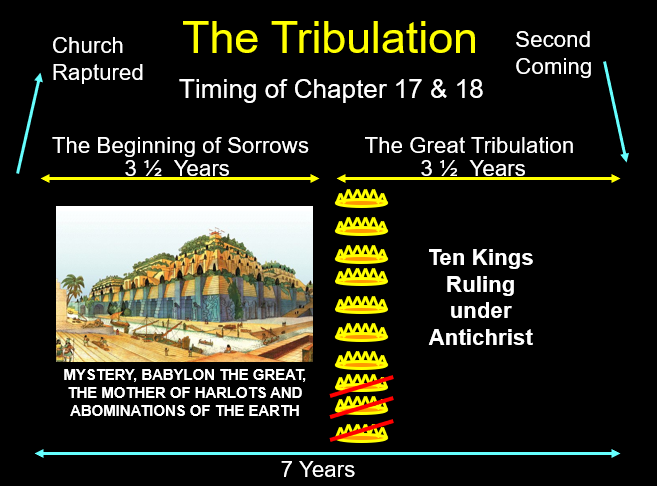
May you be blessed and encouraged to study God’s Word more as we see these day’s approaching!
The post Zechariah Ch 4-5 first appeared on Calvary Chapel Portsmouth.
]]>The post Palm Sunday – 2022 first appeared on Calvary Chapel Portsmouth.
]]>**There is no audio recording of this study, but the Powerpoint slides used for this teaching are available here**
Palm Sunday… It was, of course, the day we remember Jesus riding into Jerusalem on a donkey – famously fulfilling the prophecy from Zechariah 9:9 given sone 500 years earlier. We know from scripture that a ‘multitude’ of Jesus disciples spread their coats on the ground, waved palm branches and sang praises to God (actually singing from Psalm 118) as Jesus rode by. That much tradition has passed down to us. (Palm Sunday is one of the few things tradition actually gets right!). We know too that this really angered the Pharisees! – but why?
But why was this day really so important? Why does Psalm 118 speak of this specific day saying “This is the day which the LORD hath made; we will rejoice and be glad in it” (Psalms 118:24).
Did you also know that not only Zechariah but Daniel also recorded details of this specific day 500 years before it happened?
David spoke of this day one thousand years before it came to pass! That is mind-boggling! Try to think of an event on a specific day that will take place 1000 years in the future!
But we discover that even Moses recorded details about this day almost one thousand five hundred years before!
In fact, we can go back two thousand years before this day, to the time of Abraham, and find it alluded to in Genesis 22!
So what is really so special about this day? Why does this day stand out from the crowd and demand our attention?
The answer lies in one of the greatest conundrums in the Bible!
Jesus came to reveal Himself to Israel and the world, right? So why, for almost His entire ministry, did He play-down who He really was? He constantly told people He healed to not make him known! “See you tell no man” was Jesus’ reply to those who wanted to shout abroad His greatness. He even silenced evil spirits from revealing His identity: “And unclean spirits, when they saw him, fell down before him, and cried, saying, Thou art the Son of God. And he straitly charged them that they should not make him known“. (Mark 3:11-112). Incredibly, after feeding the 5000 the multitude wanted to crown Him and make Him their king there and then! But “When Jesus therefore perceived that they would come and take him by force, to make him a king, he departed again into a mountain himself alone” (John 6:15).
Whilst all this ‘downplaying’ his identity was going on, another strange phenomenon was taking place. On a number of occasions, Jesus’ enemies came to take Him by force to silence Him. Yet each time Jesus simply walked through their midst as if protected by a spiritual force-field! They just could not touch him!
But then, on Palm Sunday everything changed! Jesus not only allowed the crowds to worship Him as the Messiah (“Blessed be he that cometh in the name of the LORD” ( Psalms 118:26 )), He actually arranged the whole event, telling the disciples to go and get the donkey, and riding into Jerusalem as a king (just as Solomon had ridden into Jerusalem as a king in 1 Kings 1:38). When the Pharisees tried to silence the disciples Jesus retorted that even the stones would sing out His praise, such was the significance of this day!
So why this day? Why reveal Himself now?
Because this was the one and only day, prophesied by the angel Gabriel (and recorded by Daniel) when the Messiah would reveal Himself to Israel!
The prophecy is found in Daniel chapter 9, and foretells the exact day that Israel’s Messiah would come – and He did! But although a group of His disciples acknowledged it, the nation slept on in their ignorance and unbelief. They missed the ‘time of their visitation‘ (Luke 19:44). As a result, Jesus pronounced national blindness upon them – which Paul tells us in Romans 11:25 will last until ‘the fulness of the Gentiles be come in‘.
The significance of this day to Jews and Gentiles alike cannot be overstated!
It stands as a testimony to a God who is outside of time and can tell the end from the beginning (Isaiah 46:9-10) foretelling events thousands of years before they happen. It stands as a warning to not neglect the prophetic scriptures and the signs of the times, and it stands as a reminder that the Gentiles have been ‘grafted in’ to the family of Abraham by faith.
19 “Thou wilt say then, The branches were broken off, that I might be grafted in. 20 Well; because of unbelief they were broken off, and thou standest by faith. Be not highminded, but fear: 21 For if God spared not the natural branches, take heed lest he also spare not thee. 22 Behold therefore the goodness and severity of God: on them which fell, severity; but toward thee, goodness, if thou continue in his goodness: otherwise thou also shalt be cut off”. Romans 11:19-22
May you be blessed and encouraged by this study.
The post Palm Sunday – 2022 first appeared on Calvary Chapel Portsmouth.
]]>The post Jude vs 8-10 first appeared on Calvary Chapel Portsmouth.
]]>Jude has been reminding his readers that it really does matter how you life your life as a Christian. Although your salvation is secure and guaranteed, your rewards and inheritance are not.
John says “Look to yourselves, that we lose not those things which we have wrought, but that we receive a full reward”. (2 John vs 8).
Peter says that we should strive that we might have an ‘abundant entrance’ into Heaven (2 Peter :11).
Paul says that if we sow to the flesh, and spend our time and affections on worldly things (wood, hay and straw), we will still be saved (because Salivation is based solely on the completed work of Christ), but we ourselves will suffer loss when we stand before the Judgement seat of Christ (1 Cor 3:15 / Gal 6:7-8 / 2 Cor 5:10).
Jude has given us three examples to make his point:
- 1st Example
–Though saved from Egypt, those who did not believe all died in the wilderness and did not receive their inheritance
- 2nd Example
–The Angels who left their natural abode (though having been in the presence of God, became subject to His wrath and judgment
- 3rd Example
–The cities of Sodom & Gomorrah, though situated in the fertile plain of Jordan, ‘as beautiful as the Garden of Eden’ (Gen 13:10), were destroyed by God on account of their giving themselves over to immoral lusts.
The warning is given: those who give themselves over to the flesh will suffer loss.
In verses 8-10 Jude starts to detail just what those who are given over to worldly lust are really like.
The first characteristic is that they have no regard for authority, and even despise and mock those who are above them. The example Jude gives to illustrate this point however, must be one of the strangest remarks found in the Bible! In this study we explore what Jude was speaking of when he said: “Yet Michael the archangel, when contending with the devil he disputed about the body of Moses, durst not bring against him a railing accusation, but said, The Lord rebuke thee”.
The conclusion and point Jude is making is clear. God takes the issue of authority (and the respect we should show toward it) very seriously. Whether it be order in a nation… – Romans 13:1
…order in the church – 1 Cor 14:40 / 1 Tim 3 / Titus 2 …order in the family – Titus 1:6 / Eph 6:1-4 or order in a marriage – 1 Cor 11 / Eph 5:23 / 1 Peter 3:1-7
May you be blessed and encouraged by this study.
The post Jude vs 8-10 first appeared on Calvary Chapel Portsmouth.
]]>